
UK Critical Minerals Supply Chain: Strategies for secure growth

On the 19th of March, QARAS Global had the privilege of attending a session of the All-Party Parliamentary Group (APPG) on Critical Minerals at the UK House of Parliament. APPGs are cross-party groups of Members of Parliament and Peers that commit to examine pressing issues, bringing together policy-makers and the industry to inform on policy development and decision-making. The APPG on Critical Minerals specifically focuses on the UK’s current and upcoming strategies on engagement, exploration, production, and trade of minerals that are essential to technology, energy, and defence. The session was chaired by Perran Moon MP, Noah Law MP, and Baroness Northover, with Amanda van Dyke (Founder of the Critical Minerals HUB) and Jeff Townsend (Founder at the Critical Minerals Association) as guest speakers. Many other senior representatives from the sector were also present at the event. Key discussions centered around the established and emerging geopolitical dynamics in relation to critical minerals, with particular attention on vulnerabilities exposed by global dependencies. The G7 response to these vulnerability was highlighted, emphasising coordinated efforts to strengthen and diversify mineral supply chain. During the meeting, emphasis was placed on underfunding of domestic mineral exploration projects in the UK. Such underfunding leaves businesses vulnerable to foreign acquisition. It is expected that in the timeframe between now and the year 2035, the UK will see a 1,100% increase in demand for lithium. And the demand for copper will more than double. As the world undertakes a ‘green transition’, the demand for critical minerals will see a dramatical increase due to the dependency on low-carbon tech. Currently, China maintains a dominant and near-monopolistic position in the global supply chain, leaving other countries dependant on trade with China. Last year, China placed restrictions on export of some minerals, which had weakened the western automotive and defence sectors. Overview: China’s strategy on critical minerals When comparing the strategies each state has in place to secure critical minerals for themselves, it quickly becomes apparent that the long-term industrial investment approach, rather than sudden development through other means such as legislation, is the key reason how China became and stays the world’s leading producer and processor of critical minerals. The approach is simple – it is a combination of domestic mining operations and international investment into mineral assets (mines and refineries). This approach allowed China to secure access to minerals crucial for electric vehicles, defence technologies, renewable energy, electronics, fiber optics, batteries, and modern manufacturing technologies, while simultaneously allowing China to dictate the geopolitical dynamics of global critical minerals supply chains. Below are two examples of how China has used its leverage and dominance over the US: G7 and critical minerals As per G7 Critical Minerals Action Plan (2025), G7 recognises that critical minerals are essentially a foundation for the economies of the future, and are fully committed to strengthen the “cooperation with mineral-rich emerging market and developing country partners”. The plan as of 2025 is to invest into diversification of supply – meaning investing into businesses all around the world. Member states are committed to expanding mining, processing, and recycling – both domestically and in partner countries. The same strategy that China has proven successful. Ultimately, the G7’s new strategy reflects a clear contrast to the previous strategy: from having a passive stance and relying on global markets, to shaping supply chains through investments, partnerships, and policy. It evolved into a coordinated and multi-layered strategy that aims to reduce dependency on concentrated supply chains mainly because they are dominated by China, while also aiming to simultaneously strengthen resilience across allied economies. Based on current trends, the UK and allied economies are to be faced with a sharp-rising demand for critical minerals over the next 10 years. While it is more than likely that China will continue to dominate the global processing, it is important to pay attention to strategic international and domestic investments as they will secure partial control over supply chains. Frontier market: Mongolia Mongolia’s rich deposits of critical minerals places it as one of the most promising long-term sources outside of the current established supply chains. The ever-evolving mining sector of Mongolia is the driver of its economy. With more than 10,000 deposits, holding over 80 types of minerals, it makes up about 93% of total exports, about 58% of the FDI and 22.8% of the GDP – the country is on trajectory to becoming a major exporter of the same minerals that underpin the global manufacturing and energy transition. With development of the infrastructure and improvement of processing capabilities, Mongolia presents a compelling opportunity for the UK – strategic capital and partnership. By engaging early with the development projects and offtake arrangements, the UK can and will secure access to critical resources while also supporting Mongolia’s path to a prosperous and stable minerals hub. QARAS Global’s presence in the frontier markets of Mongolia, positions the company to provide the UK with access to these essential resources.
Mongolia’s Critical Role in the Global Energy Transition
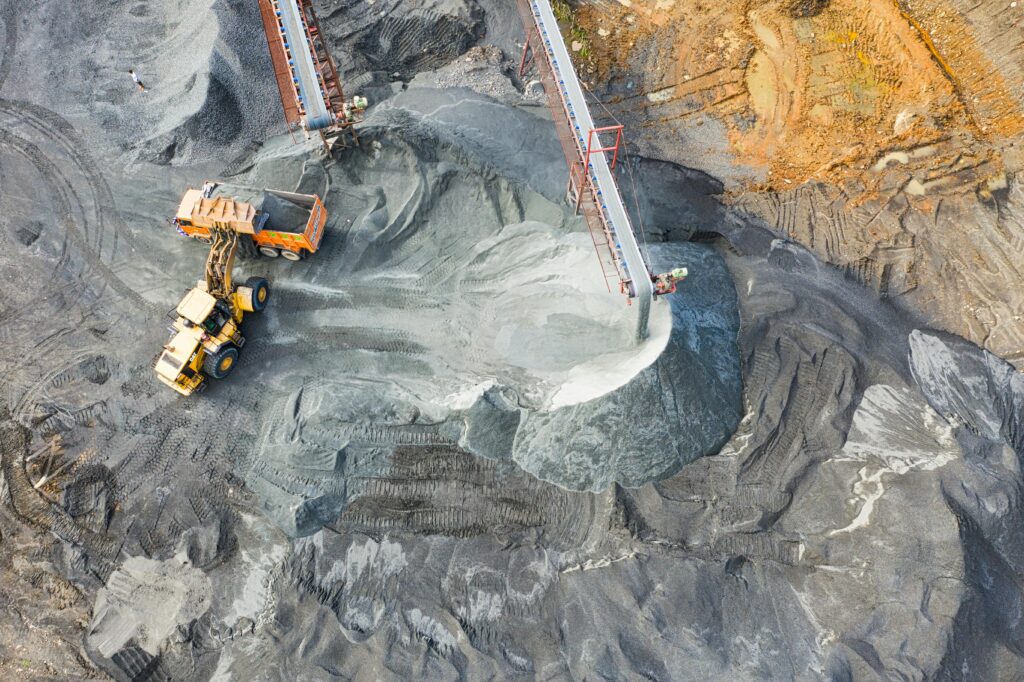
Mongolia’s rich endowment of copper, uranium, fluorspar, and rare earths makes it a pivotal player in the global shift to clean energy, as highlighted in this latest article by the Lowy Institute. Minerals already constitute more than 90% of Mongolia’s exports, but the nation has underscored its commitment to becoming a leading player in rare earth elements (REEs) and critical mineral production by signing a MoUs with Korea and the U.S. to advance secure and resilient critical mineral supply chains. In October 2023 France signed a $1.7 billion landmark uranium mining deal with the Mongolian government. The demand for Mongolia’s energy transition minerals provides a critical opportunity and is leading the nation’s government to explore regulatory reforms that will expedite project licensing and permits, potentially clearing the way for Mongolia’s significant role in the global energy transition. QARAS Expertise: With two decades of in-country presence, QARAS understands that Mongolia’s true advantage lies not just in resources, but in equitable, well-structured partnerships. We navigate policy, maintain mine-level to government-level connectivity, and understand infrastructure realities. As demand grows for minerals critical in batteries, EVs, and clean tech, our ability to source responsibly and efficiently ensures clients benefit from Mongolia’s emerging role in the energy transition. Original Article: https://www.lowyinstitute.org/the-interpreter/mongolia-s-critical-role-global-energy-transition
India Trials Coking Coal Imports from Mongolia, by Air!
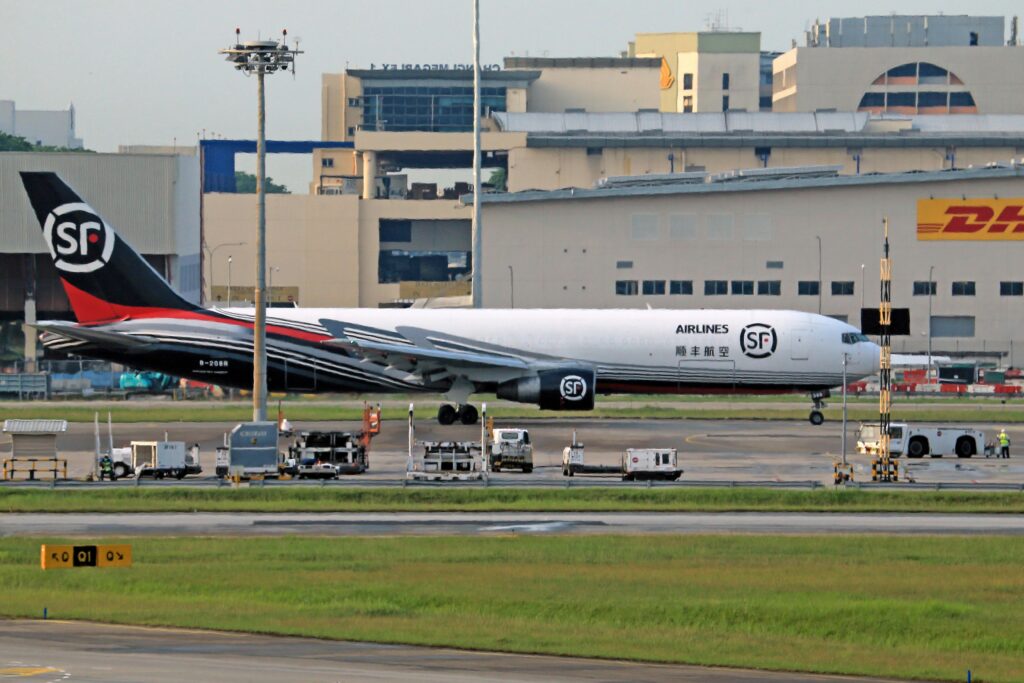
A Reuters report reveals that India’s SAIL piloted a 1‑tonne coking coal shipment from Mongolia, proposing air freight to test quality quickly, with plans for a 75,000‑ton shipment depending on results. This move reflects India’s strategy to diversify away from traditional sources like Australia, and Mongolia’s increase in market reach for coal exports. QARAS Perspective: This trial underscores Mongolia’s growing recognition as a cost-competitive supplier of high-grade coking coal. Logistics may be complex, but QARAS’s deep expertise in cross-border routing, rail, road (or even air) means we can deliver fast-sample shipments and scale to full contracts into China, and regionally. Our in-country network reduces trial risks and accelerates path-to-contract for clients. Original Article: https://www.reuters.com/world/china/indias-sail-import-trial-coking-coal-cargo-mongolia-maybe-by-air-2025-05-06/