
UK Critical Minerals Supply Chain: Strategies for secure growth

On the 19th of March, QARAS Global had the privilege of attending a session of the All-Party Parliamentary Group (APPG) on Critical Minerals at the UK House of Parliament. APPGs are cross-party groups of Members of Parliament and Peers that commit to examine pressing issues, bringing together policy-makers and the industry to inform on policy development and decision-making. The APPG on Critical Minerals specifically focuses on the UK’s current and upcoming strategies on engagement, exploration, production, and trade of minerals that are essential to technology, energy, and defence. The session was chaired by Perran Moon MP, Noah Law MP, and Baroness Northover, with Amanda van Dyke (Founder of the Critical Minerals HUB) and Jeff Townsend (Founder at the Critical Minerals Association) as guest speakers. Many other senior representatives from the sector were also present at the event. Key discussions centered around the established and emerging geopolitical dynamics in relation to critical minerals, with particular attention on vulnerabilities exposed by global dependencies. The G7 response to these vulnerability was highlighted, emphasising coordinated efforts to strengthen and diversify mineral supply chain. During the meeting, emphasis was placed on underfunding of domestic mineral exploration projects in the UK. Such underfunding leaves businesses vulnerable to foreign acquisition. It is expected that in the timeframe between now and the year 2035, the UK will see a 1,100% increase in demand for lithium. And the demand for copper will more than double. As the world undertakes a ‘green transition’, the demand for critical minerals will see a dramatical increase due to the dependency on low-carbon tech. Currently, China maintains a dominant and near-monopolistic position in the global supply chain, leaving other countries dependant on trade with China. Last year, China placed restrictions on export of some minerals, which had weakened the western automotive and defence sectors. Overview: China’s strategy on critical minerals When comparing the strategies each state has in place to secure critical minerals for themselves, it quickly becomes apparent that the long-term industrial investment approach, rather than sudden development through other means such as legislation, is the key reason how China became and stays the world’s leading producer and processor of critical minerals. The approach is simple – it is a combination of domestic mining operations and international investment into mineral assets (mines and refineries). This approach allowed China to secure access to minerals crucial for electric vehicles, defence technologies, renewable energy, electronics, fiber optics, batteries, and modern manufacturing technologies, while simultaneously allowing China to dictate the geopolitical dynamics of global critical minerals supply chains. Below are two examples of how China has used its leverage and dominance over the US: G7 and critical minerals As per G7 Critical Minerals Action Plan (2025), G7 recognises that critical minerals are essentially a foundation for the economies of the future, and are fully committed to strengthen the “cooperation with mineral-rich emerging market and developing country partners”. The plan as of 2025 is to invest into diversification of supply – meaning investing into businesses all around the world. Member states are committed to expanding mining, processing, and recycling – both domestically and in partner countries. The same strategy that China has proven successful. Ultimately, the G7’s new strategy reflects a clear contrast to the previous strategy: from having a passive stance and relying on global markets, to shaping supply chains through investments, partnerships, and policy. It evolved into a coordinated and multi-layered strategy that aims to reduce dependency on concentrated supply chains mainly because they are dominated by China, while also aiming to simultaneously strengthen resilience across allied economies. Based on current trends, the UK and allied economies are to be faced with a sharp-rising demand for critical minerals over the next 10 years. While it is more than likely that China will continue to dominate the global processing, it is important to pay attention to strategic international and domestic investments as they will secure partial control over supply chains. Frontier market: Mongolia Mongolia’s rich deposits of critical minerals places it as one of the most promising long-term sources outside of the current established supply chains. The ever-evolving mining sector of Mongolia is the driver of its economy. With more than 10,000 deposits, holding over 80 types of minerals, it makes up about 93% of total exports, about 58% of the FDI and 22.8% of the GDP – the country is on trajectory to becoming a major exporter of the same minerals that underpin the global manufacturing and energy transition. With development of the infrastructure and improvement of processing capabilities, Mongolia presents a compelling opportunity for the UK – strategic capital and partnership. By engaging early with the development projects and offtake arrangements, the UK can and will secure access to critical resources while also supporting Mongolia’s path to a prosperous and stable minerals hub. QARAS Global’s presence in the frontier markets of Mongolia, positions the company to provide the UK with access to these essential resources.
Development Announcement: QARAS Global Development Hub
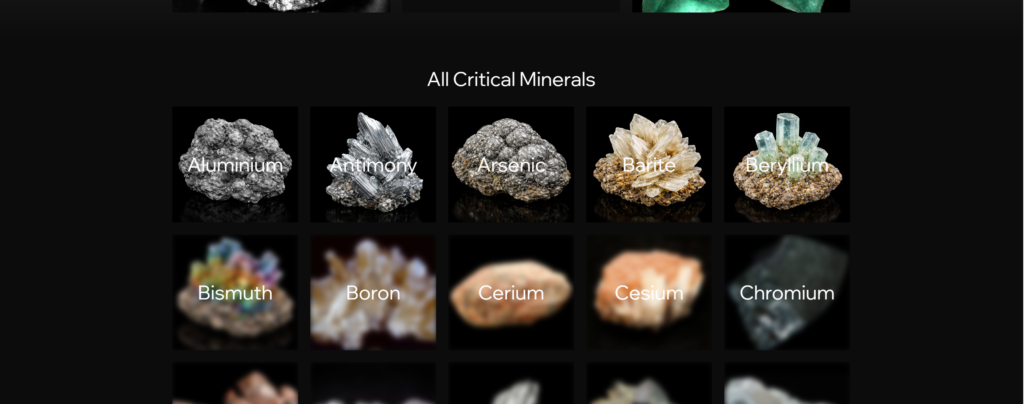
Entering the mining and physical commodities sector is not designed for accessibility. It is fragmented, opaque, and often gated behind expensive courses, closed networks, and partial information scattered across platforms. For newcomers, the barrier is not intelligence or ambition, but simply knowing where to begin. At the same time, even experienced professionals face a different constraint. The industry evolves, new materials emerge, supply chains shift, and regulatory frameworks tighten. Staying current or simply learning more requires time, structure, and access to consolidated knowledge, which is rarely available in one place. Critical minerals will define the next industrial cycle. Batteries, aerospace, defence systems, and data infrastructure all depend on upstream resources. Yet the pathway into understanding and operating within this sector remains unnecessarily complex. So we are addressing it directly. We have initiated our educational-purpose side-project, development of the QARAS Global Development Hub, a structured, interactive knowledge base designed to consolidate the core components of the industry into a single, accessible platform. The Hub will integrate: Development is underway, with a targeted public release in Autumn 2026.
Mongolia’s Critical Minerals: Key takeaways from MiningWeek, London 2026
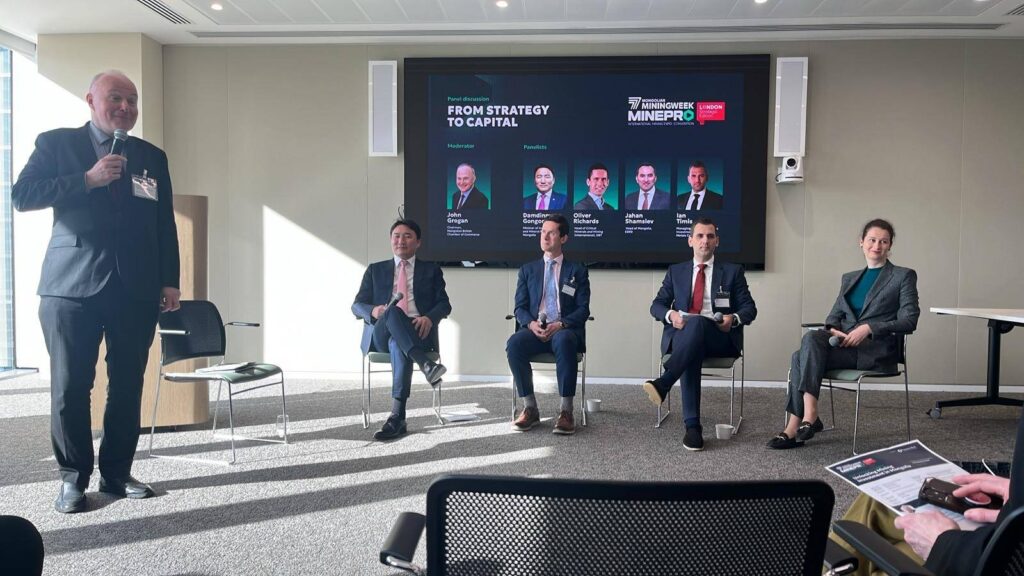
On the 24th of February 2026, industry leaders, investors, and policymakers gathered in London for MiningWeek & MinePro 2026, an event organised with Mongolia’s Ministry of Industry and Mineral Resources to attract international investment into the country’s rapidly evolving mining sector. For QARAS Global, the event was an important opportunity to engage directly with government leaders, financial institutions, and mining stakeholders while reinforcing our role as a trusted bridge between Mongolia’s mineral resources and global commodity markets. Strengthening Mongolia’s Position in Global Critical Minerals The event opened with remarks from G. Damdinnyam, Mongolia’s Minister of Industry and Mineral Resources, who outlined Mongolia’s mining policy framework and the government’s ongoing regulatory reforms. He emphasised the country’s commitment to transparency, sustainability, and long-term foreign investment. The international dimension of Mongolia’s mining partnerships was also evident. Fiona Blyth, UK Ambassador to Mongolia, attended alongside senior Mongolian and UK stakeholders, highlighting growing UK-Mongolia cooperation in mining and critical minerals development. Oliver Richards, Head of Critical Minerals & Mining International at the UK Department for Business and Trade, provided a global outlook on critical minerals supply. He highlighted the concentration risks in global supply chains and the rising demand driven by electric vehicles, clean energy technologies, and advanced manufacturing. Richards also outlined the UK’s 10-year Critical Minerals Strategy, which aims to: The strategy is supported by expanding partnerships across Central Asia, including agreements with Kazakhstan (2023), Mongolia (2024), Uzbekistan (2025), and Kyrgyzstan (2025). Sustainable Investment and the Role of International Finance Representatives from the European Bank for Reconstruction and Development (EBRD) shared their perspective on responsible mining and sustainable investment. James Lea-Cox, Head of Extractive Industries and SME at EBRD, emphasised that mining aligned with international environmental and social standards can be a powerful driver of economic development and the green transition. EBRD-supported projects must meet strict requirements, including: -Environmental and social risk management-Alignment with the Paris Agreement-Emissions reduction strategies-Biodiversity protection-Responsible waste management-Transparent stakeholder engagement Natalia Lacorzana, Director of Natural Resources at EBRD, outlined the bank’s investment priorities for 2024-2028, focusing on decarbonisation, digital innovation, and ESG improvements within mining operations. She also introduced initiatives such as the Junior Mining Programme (JUMP), designed to prepare early-stage mining projects for institutional investment. Meanwhile, Rene van Hell, EBRD Board Director representing Mongolia, highlighted Mongolia’s significant potential in critical minerals and rare earth elements, noting the bank’s commitment to acting as a long-term sustainable investment partner in the country. Panel discussions under the theme “From Strategy to Capital” explored how mining projects can connect with institutional capital, strengthen ESG standards, and expand international partnerships. The event also facilitated project presentations, investor discussions, and B2B meetings between mining companies, financial institutions, and industry participants. Mongolia’s Mineral Advantage Mongolia holds one of the world’s most diverse mineral endowments, with more than 8,000 identified deposits including coal, copper, fluorspar, gold, iron ore, rare earth elements, tungsten, uranium, and zinc. Geographically, Mongolia’s proximity to China, the world’s largest commodity consumer, combined with improving logistics links to Europe and Northeast Asia, makes it a highly competitive sourcing location for global commodities and critical minerals. Where does QARAS Global Fit? Unlocking Mongolia’s mineral potential requires more than opportunity. It requires trusted local access and operational expertise. QARAS Global is a Mongolia and Central Asia-focused commodities trading company with over 15 years of in-country presence. We manage trade facilitation, logistics, and compliance directly from Mongolia. Our long-standing relationships with mine owners, geologists, testing laboratories, logistics operators, and domestic regulatory agencies allow our partners to access Mongolia’s mineral resources with significantly reduced operational and commercial risk. From our bases in Ulaanbaatar and London, we bridge frontier-market opportunities with international trade in bulk commodities, energy resources, and critical minerals. Let’s work together Events like MiningWeek & MinePro demonstrate the growing global interest in Mongolia’s mining sector. As the industry evolves and international capital seeks reliable partners on the ground, QARAS Global is well-positioned to facilitate responsible, transparent, and efficient mineral trade. If you are exploring sourcing opportunities, investment partnerships, or project collaboration in Mongolia and Central Asia, we welcome the conversation. Contact QARAS Global to explore how we can support your next venture in the region.
Can the UK Achieve Industrial Revolution 2.0 with Critical Minerals?
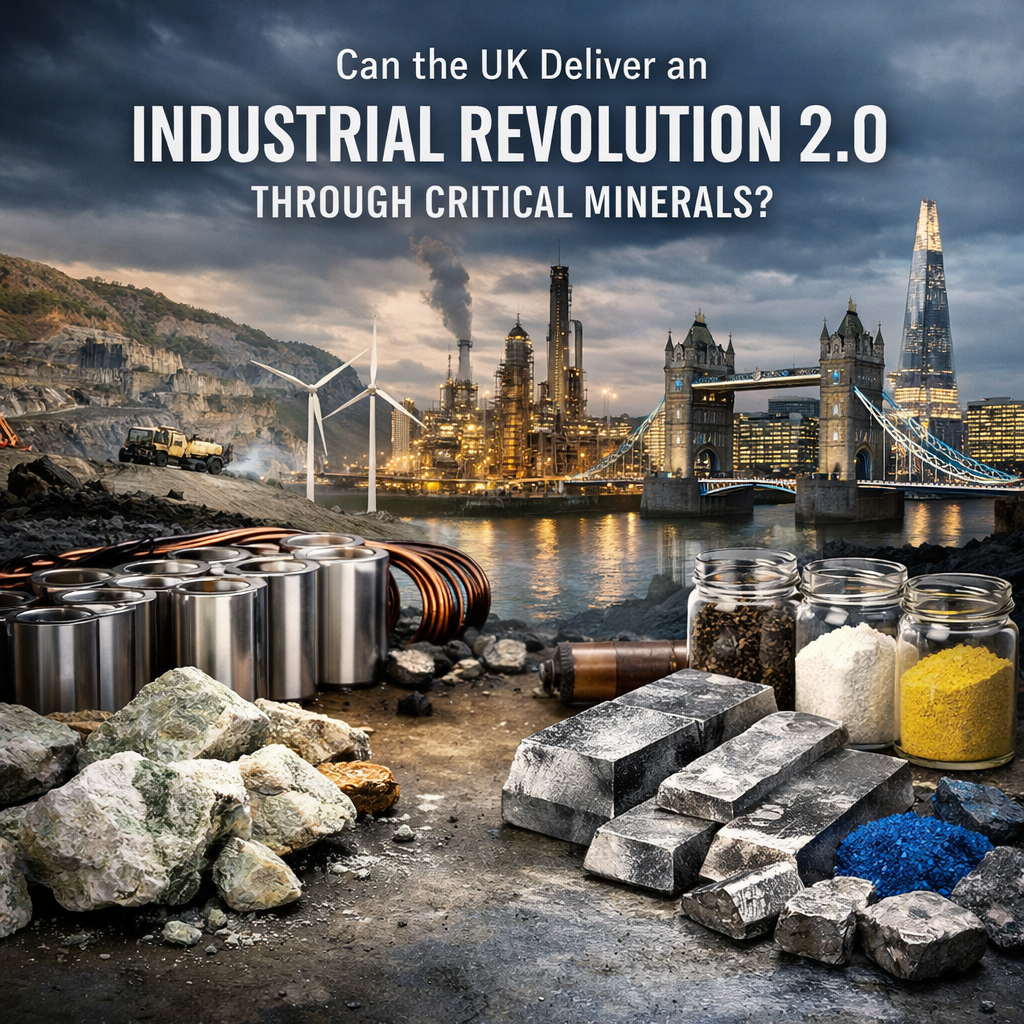
“Can the UK Deliver an Industrial Revolution 2.0 Through Critical Minerals?” The phrase “Industrial Revolution 2.0” is often used casually, as shorthand for electrification, artificial intelligence and decarbonisation. Yet the historical Industrial Revolution was not driven by ideas alone. It was underpinned by physical inputs: coal, iron, steam infrastructure and maritime dominance. Britain did not merely innovate. It controlled the material base of production. The modern equivalent of coal and iron is lithium, rare earth elements, copper, tungsten, fluorspar and graphite. These materials are the foundation of electric vehicles, grid storage, wind turbines, semiconductors and advanced defence systems. Without secure access to them, there is no green transition and no technological sovereignty. The United Kingdom currently occupies an ambiguous position in this landscape. It retains deep capital markets, a respected legal system and global financial reach. London continues to finance mining projects across Africa, Central Asia and Latin America. Yet domestically, the country has limited extraction capacity and almost no large-scale refining infrastructure. In processing, it is not a leader. This creates a structural vulnerability. The value chain of critical minerals is not confined to mining. The strategic leverage sits in processing and midstream conversion. Concentrates are of little use without chemical upgrading. Magnet metals are irrelevant without separation capacity. Battery materials are only strategic when refined to specification. China recognised this decades ago and built dominance in refining and magnet production. The United States has responded with industrial policy and large fiscal support. The European Union is accelerating its Critical Raw Materials Act to reduce external dependency. In this context, the UK risks becoming a price taker in markets that determine the future of its own industrial base. The question, therefore, is not whether Britain can mine more lithium in Cornwall or reopen tungsten projects. The more serious question is whether it can reposition itself within the global supply chain architecture. There are three possible roles. First, Britain could attempt full domestic integration from extraction to refining. This would be politically attractive but economically constrained. The geological base is limited. Permitting timelines are long. Capital intensity is high. This path alone is insufficient. Second, Britain could retreat to advanced manufacturing while relying on imports for inputs. This would repeat the strategic exposure seen in gas markets and semiconductor shortages. It would undermine long-term resilience. The third option is more realistic and potentially powerful. The UK can leverage its financial system, trading expertise and regulatory credibility to structure transparent, ESG-compliant supply chains anchored in long-term partnerships with resource nations. Instead of competing with China on scale, it can compete on governance, transparency and contractual sophistication. This requires clarity of intent. Industrial strategy must align defence procurement, automotive transition, energy policy and capital allocation. Long-term offtake agreements must be encouraged rather than left entirely to private risk appetite. Refining capacity in key materials should be strategically supported where commercially viable. Most importantly, supply chain diplomacy must be treated as economic security, not as peripheral trade policy. An Industrial Revolution 2.0 would not be announced through slogans. It would emerge from control over inputs. The first Industrial Revolution was secured through coal fields, shipping routes and financial dominance. The next one would depend on processing plants, mineral partnerships and capital discipline. We believe Britain still has tools. It lacks only strategic coherence. If critical minerals are understood as the foundation of technological sovereignty rather than as a niche commodity sector, the UK can remain central to the next industrial cycle. If not, it will finance revolutions that take place elsewhere. That distinction is what we see will define the coming decade. At present, QARAS develops structured critical mineral supply channels linking resource jurisdictions with European industrial demand. We are currently evaluating larger-scale cobalt and germanium-bearing tailings opportunities in the Gobi region, with a focus on technical viability, recoverability and long-term offtake alignment. In parallel, we are positioning around anticipated UK demand under the Vision 2035 Critical Minerals Strategy, particularly where supply security and midstream capacity remain underdeveloped. Industrial transformation begins upstream. These questions of access, processing and strategic alignment will form part of our discussions at MiningWeek & MinePro 2026, London Strategic Edition, where the next phase of supply chain architecture is being discussed.