
The global commodity trade used to be about who owned the ore. Today, it’s about who can move it. Supply isn’t scarce – coordination is. The pandemic, port congestion, and a world recalibrating its trade routes have made logistics the new frontier of competition. In mineral markets, especially, transport has become the line between opportunity and obsolescence.
The geography trap
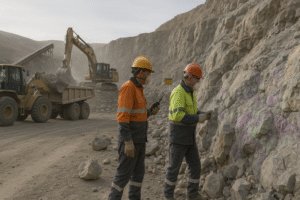
Commodities don’t care about ambition. They care about geography. A mine can produce flawless material and still lose to a competitor with half the quality and twice the logistical sense. Fluorspar in Mongolia, copper in Kazakhstan, coal in Indonesia – all share the same weakness: distance. What used to be a question of trucking rates is now a full-blown strategic equation involving rail connectivity, port access, and export policy. Whoever controls that route controls the market narrative.
The invisible cost of delays
When freight rates tripled in 2021, most traders learned what logistics departments had been quietly screaming for decades: waiting kills margins. Every day a shipment sits in port is an erosion of value. Even as prices stabilise, shipping networks remain fragile. Weather events, energy costs, and regional strikes can upend weeks of planning. A twenty-dollar swing in freight can turn a profitable deal into an expensive lesson. Those who treat delivery as an afterthought inevitably end up negotiating from a position of weakness.
Winners adapt through integration
The smartest operators now treat logistics as part of the product. Control of the supply line – whether through partnerships with carriers, digital route optimisation, or bonded warehousing – translates into reliability. Buyers no longer choose on purity alone; they choose on who can guarantee arrival within a timeframe that keeps production running. This is where brokers evolve into strategists: managing ships, storage, and customs as seamlessly as invoices and contracts.
Central Asia’s leverage moment
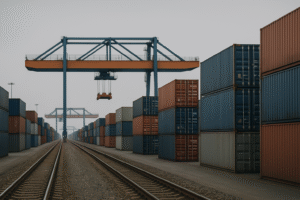
Nowhere is this transformation more visible than in Central Asia. Once dismissed as “too remote,” the region is learning to weaponise geography. Investments into rail corridors linking Mongolia, China, and the EU are slowly redefining East-to-West trade flow. The emergence of multimodal hubs in places like Zamyn-Uud or Khorgos allows regional producers to bypass maritime choke points entirely. Those who position early – securing export lanes, joint warehousing, or local partnerships – gain leverage that no mineral grade can replicate.
The new price of reliability
Markets still talk in tonnes and purity, but deals are increasingly written in timetables. The fastest-growing traders are not those who gamble on price swings – they are those who make arrival times predictable. A container that shows up on schedule builds more trust than a thousand promises of quality. That trust becomes brand equity, and in an industry still dominated by opacity, it’s the rarest commodity of all.
At QARAS, we see logistics not as the back office of mining but as its nervous system. The ability to connect mines to markets with efficiency and transparency is what separates a supplier from a partner. In a world where everyone can sell the same mineral, only those who deliver it intelligently will last.